Meet a Backslider: Interview #6
Meet the Backsliders is an interview series I’ve created for anyone who’s ever wondered, “What if climbing the ladder isn’t the point?” Each interview explores how smart, driven people got tired of chasing success that didn’t feel like success to them and what happened when they decided to backslide in their careers on purpose. If you missed the first three Backslider interviews, you can read them here, here, here, here, and here.
Every Backslider featured here has shared their story with generosity and truth, in a Q&A format. Their words are their own (with light editing for tone and flow from yours truly) - with identifying details kept vague to honor privacy (when requested).
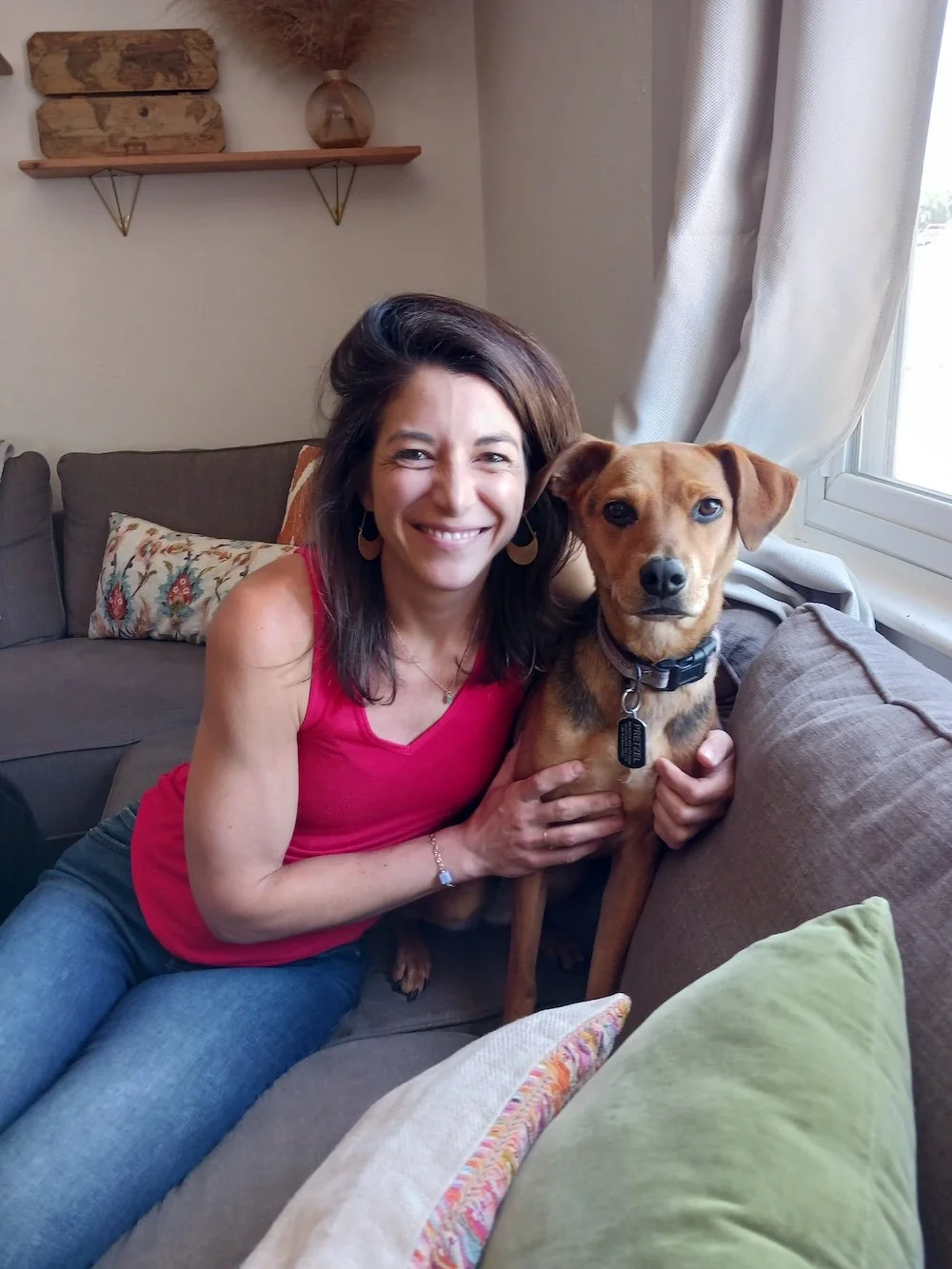
Meet Amanda: From straight-A student to high-powered C-suite executive, this Backslider learned early how to succeed in systems built on achievement, competition, and ambition. She climbed quickly and thrived in fast-paced environments — until an abrupt life change brought everything to a sudden halt.
Instead of crafting a strategic pivot, she followed an inner pull toward freedom and space, trading boardrooms for hiking trails, goat farms, carpentry apprenticeships, and a life guided by intuition rather than titles.
This next Backslider interview is with someone I met in the most me kind of way (meaning it involved a dog or gardening or a DIY project).
I met Amanda Hayden when she booked me on Rover to take care of her dog, Pretzel, while she traveled for work. Rover was my solution to getting even more dog time than I already had. And - it led me to meet Amanda. Win win! It quickly became clear that we needed to be friends. I can’t wait for you to read her Backslider interview.
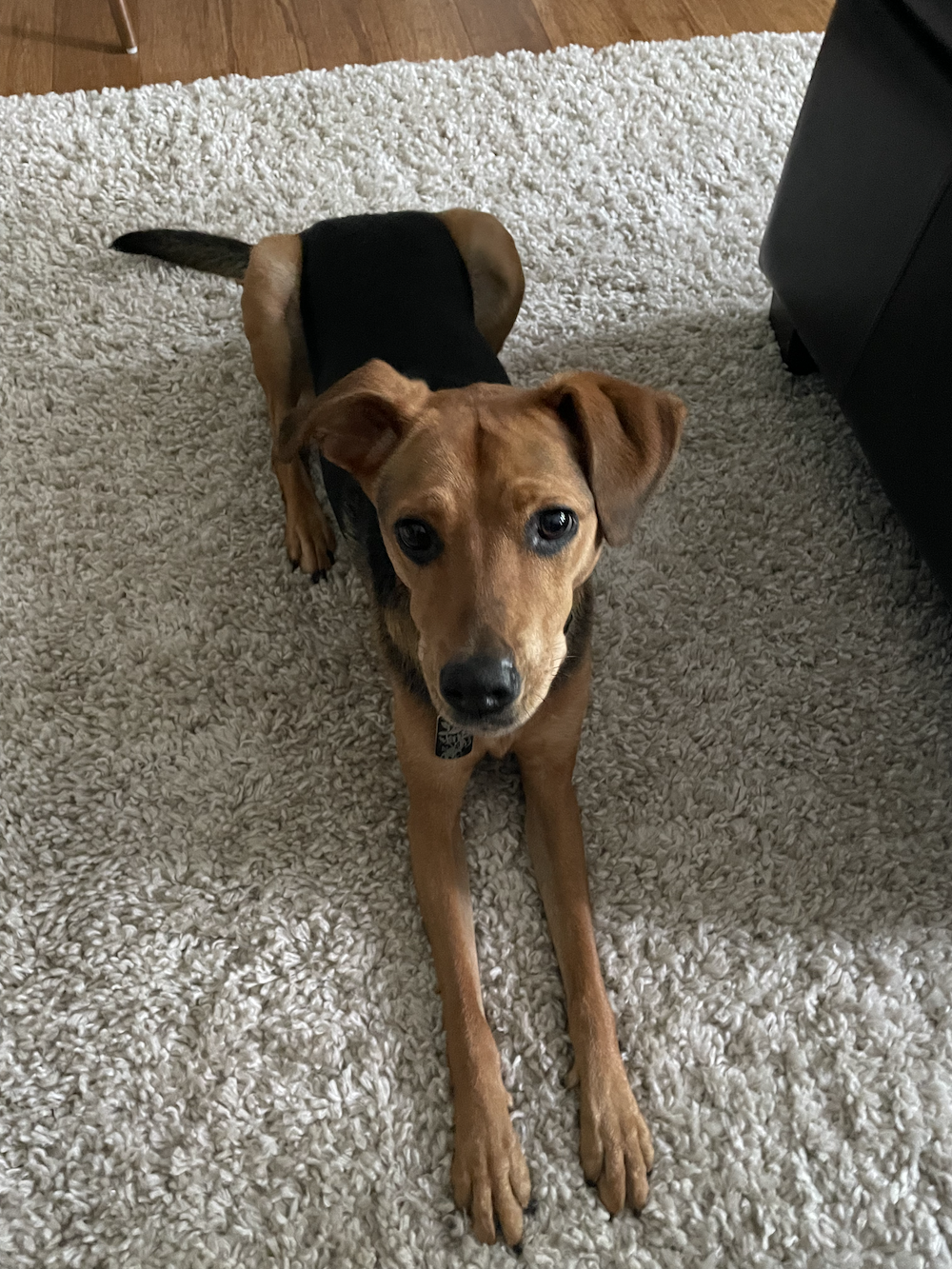
But first! Here’s a super cute photo of Pretzel in 2021 when we were roommates. Look at those eyes.
Now onto Amanda’s interview!
Q1: Can you describe your history with ambition? Was there someone in your life who pushed you toward being ambitious in a certain way?
I was a quiet kid, sat when I was told to sit, raised my hand to speak, did as I was told. I discovered achievement early, because systems reward those who conform, and I was both smart and compliant. The push came from the messaging all around me, the gold stars and the A+. Ambition started for me as fuel for the achievement engine. I felt good when recognized, graded, scored. If we were to be ranked, I wanted to be first. Academic ambition naturally evolved into professional ambition, amplified in my free time by competitiveness in athletics and later personal fitness.
Q2: Was there a specific moment or breaking point that pushed you to think about how you defined success for yourself, or did it happen gradually?
One fell swoop. After three years of loving my fast-paced, demanding C-suite job, it was consuming me entirely. I had ceded over to it more than just time and energy; I had given it permission to shape my values, and it was eroding some deeper part of me. When personal circumstances forced me to leave that job abruptly, I found myself standing in a pile of rubble and ash, the false boundaries it had defined around myself in ruins. In the wake of that devastating moment, I recognized that I couldn’t rebuild that life in the same form even if I wanted to. And more importantly, I didn’t want to.
Q3: How did you decide what kind of work or environment you wanted instead?
This is perhaps the most important question of all. I didn’t decide with my head. I didn’t plan or strategize. I felt a very distinct push from inside myself to get away, a longing to be outside, and a strong desire for space and freedom. So right after I left my job, I gave myself three months, rented out my house, and went out west. I hiked and camped all over. I joined Workaway and started trading my labor for room and board—two weeks on a goat farm in Montana, another two on a homestead in Washington, another two on a cattle ranch in Wyoming. I made it up as I went. I did things I never expected to find myself doing. I trusted my gut. It led me to the most incredible people, including a woman at the tail end of those three months who invited me to hike the Pacific Crest Trail with her, which I did the following summer.
My old colleagues jokingly referred to me as “indoorsy” in my previous life. I didn’t even know that a love for nature and wilderness experiences existed inside of me until space in my life opened up. Based on that premise, that there are things about myself I can only discover with space for intuition, I refused to plan more than one step at a time. I let life lead me. I’ve had so many incredible experiences since making this change. I apprenticed as a carpenter for six months. I walked across America. I bought a one-way ticket to New Zealand. I moved into a friend’s one room mountain cabin without electricity or running water, planning to start work on a book for a month or two, and stayed a year. I can split wood with an axe now!
Q4: What has been the hardest part about letting go of the climb — whether that was status, money, or identity? And was it a “one and done” letting go or something you’ve had to do over and over?
Letting go of all three of those things was hard. Money was perhaps the easiest—I don’t think I ever truly worshipped at that altar, though the big paychecks had been nice and I relished them at the time. But I’ve had more fun, rich, satisfying, electrifying experiences on a shoestring than I ever had in my comfy, self-satisfied well-paid years. Status, identity…it was a process of letting go. Going back to waiting tables was a helpful, humbling experience. It gave me the opportunity to practice standing on my own, defining my own value outside of my job. Let them think I’m “just a waitress,” I would muse.
The hardest thing to let go of was certainty. When we climb, whether we realize it or not, we hold on to the false promise of security. We build up all of these defenses against the vicissitudes of life: the solid credit score, the really good health insurance, the professional network, the nest egg. These things make us feel safe, despite the fact that the fundamental realities of life are uncertainty and impermanence. Letting go of certainty and security is terrifying at first, because it means acknowledging that I actually don’t have control over anything, my life is precious and fragile, my time on earth is the most valuable thing I have. When it stops being scary it is the most liberating truth I have ever embraced.
Q5: When that gremlin voice shows up — comparing yourself to old colleagues or your past self — how do you quiet it?
I take stock of everything I have done since I stopped climbing, and I extend myself some gratitude. I’ve experienced the most delicious freedom. I make my own schedule. I define my value in terms of how much I have to offer, how much love and time and attention I can share. I feel so full. I wouldn’t trade my life for anything and I have ZERO regrets about backsliding. It’s the wisest thing I’ve ever done.
Q6: What are you ambitious about these days, if not work? In other words, what has backsliding given you that the old version of success never could?
Backsliding gave me space to explore. It gave me permission to define my values for myself in a meaningful way and then to apply them in real life. Charting your own course allows you to test your own hypotheses. Who am I, really? What can I create with time and space? I’m ambitious about my own creativity. I’m super ambitious about uncovering the platform from which I will fulfill my ultimate purpose on earth, which is to serve others with my unique gifts. I work on it every day.
Q7: What would you say to someone who feels trapped in a high-pressure career but is scared to take a step back?
It’s ok to be afraid. Fear is understandable. Remember, though, that fear is an emotion, and you’re letting it drive. Be honest with yourself about that. When you decide that you want to call the shots, and you ask the fear to step back, then you can see your situation more clearly. With that clarity, question all the assumptions you’ve been making.
I see my career path and it looks like an MC Escher drawing. Some of the stairways don’t lead anywhere, and that to me feels more real than climbing a ladder ever did. “Making it,” reaching the top…those are the actual illusions, because I think we know at a very deep level that true contentment is going to come from within. '
No achievement in the corporate game, no amount of money is going to create a sense of fundamental wholeness; it’s not going to make you feel worthy. You must create that. And if that’s the case, you might as well have some fun while you sort it out.
Step off the ladder and take a risk. Try something new. Start a small fire. Do you know how much fun hitchhiking is? I’ll be 40 this year and I am SO excited. Life keeps getting more interesting. I have no idea what’s going to happen next, and I can’t wait to find out.
Q8: What did we miss? Anything else you'd like to share?
The world is full of people who march to the beat of their own drum. Intentional backsliding isn’t as radical as it may seem. When you follow your inner compass, you find your people (or they find you), and you don’t feel alone in the world.
Do you have your own story of intentionally backsliding? I’d love to hear it.
You might be in a season of intentional backsliding if:
You stepped away from the grind (by choice or by circumstance) and feel unexpectedly at peace
You reached the milestone you were chasing and felt… underwhelmed
Your ambition now shows up in quieter places: caring for others, tending your health, resting, creating, building community
You’re not in crisis, but you sensed where things were headed—and decided to slow down before your body forced you to
If any of this resonates, you’re not behind. You’re paying attention.
If you’d like to share your story for this Meet the Backsliders series, email me at lindsey(at)lindseylathrop.com.