Meet a Backslider: Interview #4
Meet the Backsliders is an interview series I’ve created for anyone who’s ever wondered, “What if climbing the ladder isn’t the point?” Each interview explores how smart, driven people got tired of chasing success that didn’t feel like success to them and what happened when they decided to backslide in their careers on purpose. If you missed the first three Backslider interviews, you can read them here, here, and here.
Every Backslider featured here has shared their story with generosity and truth, in a Q&A format. Their words are their own (with light editing for tone and flow from yours truly) - with identifying details kept vague to honor privacy (when requested).

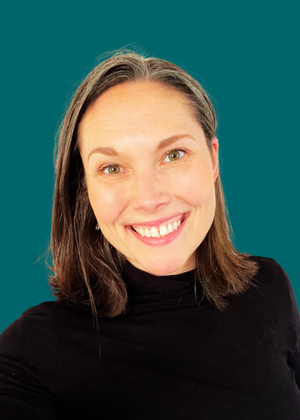
Meet Lindsey: She grew up equating success with survival and spent years climbing hard—until she realized what she really wanted was a creative, self-directed life. Today, she runs this business, tinkers with her garden and power tools, and tries her best to choose ease over urgency.
This next Backslider interview is someone you already know! Myself.
It felt a little weird to interview myself, but also kind of… necessary. My own story is the foundation of why I care so much about redefining success for ourselves.
Q1: Can you describe your history with ambition?
From a young age, I associated success with money and survival. Because if you had money, you wouldn’t live in a house that should’ve been condemned. My mom is one of 14 kids and this unsafe house is where she grew up. There were a number of years we’d gather there on Christmas Day and I'd feel super anxious. A part of me was always scanning the room, trying to figure out what kind of adult I needed to become so I’d never end up in that same kind of chaos. I knew I would need to be able to take care of myself financially because there was no safety net.
Naturally I couldn’t wait to start working and making my own money. At age 14, I got my first job and loved being good at something outside of school. I liked going above and beyond to earn praise from adults. I sometimes worked up to 3 jobs during the summer. At 16, I was a manager and by 18, I was working in an HR office with real professional responsibilities. It made me feel important.
As an elder Millennial, I absolutely drank the workism kool-aid. Workism is the belief that your career/job is where you get your meaning and purpose. It makes you believe that hard work will be rewarded and whispers “just keep chasing those gold stars.” It nudges you to go after promotions even if it means you’ll end up working more for little to no extra pay.
Q2: Was there someone in your life who pushed you toward being ambitious in a certain way?
My parents were ambitious about providing me and my sister with a stable home, food on the table, and a better start than they had. My dad was of 10 kids (yes, I have a HUGE family) and like my mom, grew up poor. He worked as an auto mechanic and eventually started his own repair shop. That’s where I first saw entrepreneurship. My mom spent her 45 year career at an insurance company.
I saw their discipline in keeping us housed, clothed, and fed. There wasn’t much talk about other aspirations. I was good at school and I figured I’d go to college since all of my friends were going. While I didn’t know what I wanted to pursue, I knew I wanted to leave my hometown.
Q3: Was there a specific moment or breaking point that pushed you to think about how you defined success for yourself, or did it happen gradually?
It happened gradually.
I enjoy working hard, I’m resourceful, and know I can achieve my goals. But the downside is that I never learned know how to rest. I’d automatically feel guilty if I chilled out for a day or two.
When I was in MBA program, I played rugby and juggled two, sometimes three jobs. Looking back, I have no idea how I managed to get a 4.0 GPA, keep up with work, and have a social life like I did.
I knew I wanted to have a passion career and earn an income doing something that would help other people. I graduated into the 2007/08 recession and became an AmeriCorps*VISTA volunteer.
I was hired at the non-profit after my AmeriCorps service and over 8.5 years, I worked my way up to Assistant Director. I grew my skills, advocated for myself, made connections, and negotiated raises. I worked a side job, lived super frugally, and paid off my school loans.
It was during this time that my new ambition became saving money so I could a) buy a house with my now husband (which we did) and b) have job options, like starting this business. I still wasn’t resting much but I was no longer in survival mode.
When I decided to become self-employed in 2014, my new goal was to not have to work for someone else again. I told myself that I just needed to earn enough to cover my personal and business expenses. That’s it. But soon I was chasing more, including making six-figures. This became my new goal, even though I didn’t actually need that much money. The years I achieved this amount of income were my most stressful. I worked around the clock, at night and on weekends. I didn’t have any hobbies and I felt tired a lot of the time.
It was around year 5 of being self-employed that I realized that I wasn’t taking advantage of its main perk…setting my own schedule. I took a look at our household finances and saw I could set a much lower salary goal. I also started working a 4-day work week and used the extra time to try new hobbies to see what stuck. I leaned hard into gardening and learned how to grow food. I volunteered. I became a more present friend and partner. We got a puppy.
The last thing I’ll share here is that my best friend lives with ME/CFS (chronic fatigue syndrome) that was brought on by career and AuDHD burnout. Watching her navigate chronic illness has been my siren call to unsubscribe from urgency culture and to be gentler with myself. For example, if I don’t get my newsletter out on time (which absolutely happens), it’ll be okay. No one is going to die. I used to berate myself for things like that. Not anymore!
Q4: What has been the hardest part about letting go of the climb — whether that was status, money, or identity? And was it a “one and done” letting go or something you’ve had to do over and over?
It’s been something I’ve had to let go of over and over - and - it’s gotten easier as I’ve had more practice.
I will always be an ambitious, hardworking, love to learn type of person. So for me, it’s been about redirecting my ambition toward other things outside of work and earning money.
I still have to pay attention because productivity culture is everywhere and I/we live in a capitalist world. For example, when I’m feeling bored, my instinct is to work on my business.
As a coach, I’ve also pressure from “Build Your Coaching Business” programs that my algorithm likes to push onto people like me. Years ago, I was in one of these programs and I remember telling a friend that my revenue goal that year was $300k. The Business Coach running the program wanted me to aim even higher! It would have required hiring a couple people, automating nearly everything, and not coaching the way I wanted to coach. Plus working so much more. That’s not the kind of business I wanted to run then (or now) and I didn’t need that much money, so why was I chasing it? So sneaky!
Q5: What are you ambitious about these days, if not work? In other words, what has backsliding given you that the old version of success never could?
So many things! I started writing this from an airport on the way home from a 10-day trip in Portugal. I spend a lot of my free time outside, tinkering in my garage. I take long walks with our dog. I strength train. I’m a good friend, daughter, and partner. I take care of my mental health. I worked very part-time for 2 months this year to go to trades school and build skills in the construction trades.
It’s not that I’m not ambitious about work— I do enjoy working— it’s just not my entire identity. It’s not who I am as a person.
In the words of personal finance writer and educator, Dana Miranda:
Asking who we are outside of work has always been an important question for life under capitalism. This culture measures our worthiness by our ability to produce or labor for profit, and we internalize that gauge in our innate self-judgment. As more and more of the fruits of our labor are captured by fewer and fewer corporations and less are distributed to us, our families, our cities and our communities, the cry to identify with anything other than work seems to be growing louder and louder.
Q6: When that gremlin voice shows up — comparing yourself to old colleagues or your past self — how do you quiet it?
My gremlin voice mostly says things like, “Your revenue should always be going up, and if it’s not, you’re doing something wrong.”
and
“You’re not living up to your potential, Lins!”
Here’s the thing…I genuinely like the life I’ve built and how I spend my time. I’m proud that I get to earn enough money helping people figure out life and career challenges. I’m also proud that I’ve built money management and investing skills to weather the unpredictability that comes with my industry.
My potential goes beyond my ability to work.
Q7: What would you say to someone who feels trapped in a high-pressure career but is scared to take a step back?
It might sound counterintuitive, but I worked hard early on to buy myself options—and backsliding is one of the options I chose.
I also recognize that being a white, cishet woman in the U.S. comes with unearned advantages that shaped what felt and still feels possible for me.
When I was in my early 20s, I watched a TED talk about this guy who took year-long sabbaticals throughout his career instead of waiting for the “one day” of retirement. It improved his creativity and work and life satisfaction. That always stuck with me because having a “one day” isn’t guaranteed. It’s one of the reasons I decided to take a 2-month sabbatical this year to pursue trades school.
Here’s the thing: the pressure to advance in your career is real. I see so many people getting sucked into the MORE MORE MORE of earning money and titles—without ever asking, “Is this actually making my life better?” That’s the pull of the hedonic treadmill —you hit one milestone and immediately start working toward the next without ever stopping to ask if this is what you want.
And then there’s lifestyle creep. It’s easier to spend more money when you’re earning more money, but then you have to keep up with that earning trajectory.
In the words of the Talking Heads: And you may ask yourself, "Well, how did I get here?"
Do you have your own story of intentionally backsliding? I’d love to hear it.
You might be in a season of intentional backsliding if:
You stepped away from the grind (by choice or by circumstance) and feel unexpectedly at peace
You reached the milestone you were chasing and felt… underwhelmed
Your ambition now shows up in quieter places: caring for others, tending your health, resting, creating, building community
You’re not in crisis, but you sensed where things were headed—and decided to slow down before your body forced you to
If any of this resonates, you’re not behind. You’re paying attention.
If you’d like to share your story for this Meet the Backsliders series, email me at lindsey(at)lindseylathrop.com.